Introduction
The pharmaceutical industry operates under some of the strictest hygiene and quality standards in the world. Every manufacturing process, from raw material handling to packaging, must be protected against contamination to ensure product safety and regulatory compliance. One often overlooked yet highly effective solution for maintaining a controlled environment is the industrial air curtain.
Air curtains create an invisible barrier of high-velocity air across doorways, preventing dust, insects, airborne contaminants, and outside air from entering sensitive production areas. They help maintain cleanroom conditions while allowing uninterrupted movement of people and materials.
What is an Air Curtain?
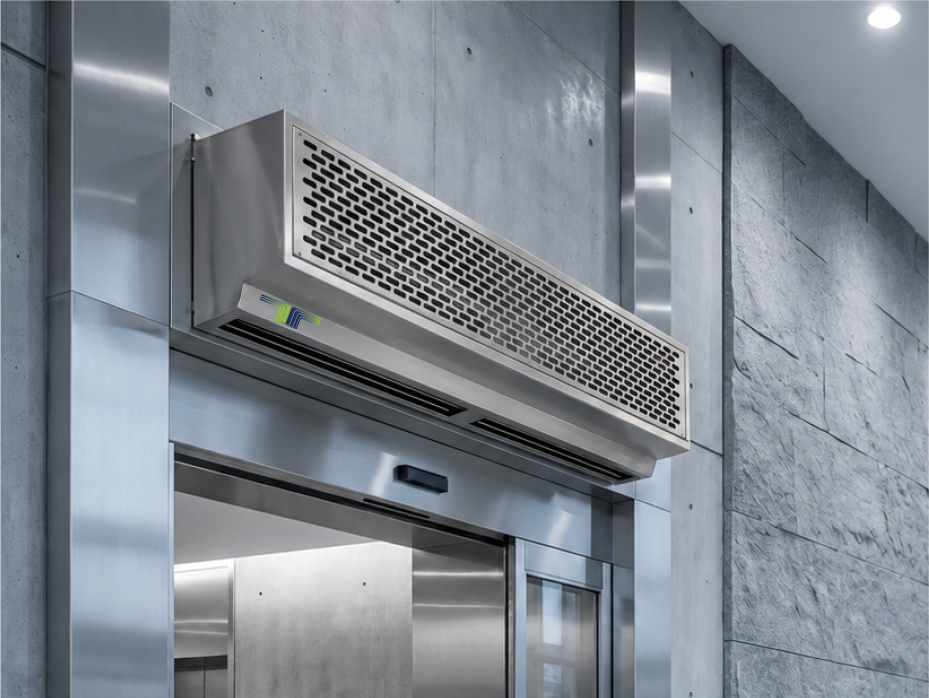
An air curtain is a device installed above or beside an entrance that blows a controlled stream of air across the opening. This airflow forms an invisible shield that separates two environments without requiring physical doors to remain closed.
Unlike traditional doors, air curtains allow continuous movement while minimizing contamination risks and maintaining indoor environmental conditions.
Why Air Curtains Are Important in Pharmaceutical Manufacturing
1. Prevents Airborne Contamination
Dust particles, pollen, insects, smoke, and airborne microorganisms can easily enter manufacturing areas through frequently opened doors.
Industrial air curtains significantly reduce the movement of contaminants into controlled environments, helping maintain product quality and reducing contamination risks.
2. Supports GMP Compliance
Good Manufacturing Practices (GMP) require pharmaceutical companies to maintain hygienic production environments.
Installing air curtains helps facilities:
- Control contamination
- Maintain clean production zones
- Reduce environmental exposure
- Improve audit readiness
Although air curtains are only one part of a GMP strategy, they play an important supporting role in maintaining hygienic conditions.
3. Maintains Temperature Control
Many pharmaceutical products require stable temperatures during production and storage.
When doors remain open, conditioned air escapes while hot and humid outside air enters the facility.
Air curtains help:
- Reduce temperature fluctuations
- Improve HVAC efficiency
- Maintain consistent environmental conditions
- Lower energy consumption
4. Prevents Insect Entry
Even a small insect entering a production area can create serious hygiene concerns.
The high-velocity air barrier discourages flying insects from entering the building, reducing dependence on chemical pest control methods near production zones.
5. Improves Employee Productivity
Opening and closing heavy industrial doors repeatedly slows down operations.
Air curtains allow employees, forklifts, and material handling equipment to move freely while maintaining environmental separation.
This results in:
- Faster workflow
- Improved logistics
- Reduced waiting time
- Increased operational efficiency
Where Are Air Curtains Used?
Air curtains are widely installed in:
- Pharmaceutical manufacturing plants
- Cleanrooms
- Packaging areas
- Laboratories
- Sterile production facilities
- Warehouses
- Cold storage entrances
- Food processing industries
- Hospitals
- Biotechnology facilities
Benefits of Stainless Steel Air Curtains
For pharmaceutical environments, stainless steel construction offers several advantages:
- Corrosion resistant
- Easy to clean
- Hygienic surface
- Long operational life
- Suitable for cleanroom applications
- Professional appearance
Choosing the Right Air Curtain
Before selecting an air curtain, consider:
- Door height
- Door width
- Air velocity requirements
- Indoor and outdoor pressure differences
- Mounting location
- Noise level
- Maintenance requirements
Selecting the correct model ensures maximum protection and energy efficiency.
Maintenance Tips
Routine maintenance keeps air curtains operating efficiently.
Recommended practices include:
- Cleaning air filters regularly
- Inspecting motors and fans
- Checking airflow direction
- Removing accumulated dust
- Scheduling periodic servicing
Proper maintenance extends equipment life and ensures consistent performance.
Frequently Asked Questions
Do air curtains stop insects?
Yes. High-speed airflow creates a barrier that discourages flying insects from entering through open entrances.
Can air curtains replace doors?
No. Air curtains complement existing doors by providing protection when doors are open.
Are air curtains energy efficient?
Yes. They reduce the loss of conditioned air, lowering HVAC energy consumption.
Are air curtains suitable for cleanrooms?
Yes. Stainless steel industrial air curtains are commonly used in pharmaceutical and cleanroom environments.
Conclusion
Air curtains are an effective investment for pharmaceutical facilities looking to improve hygiene, enhance energy efficiency, and support GMP compliance. By reducing contamination risks while allowing seamless movement of people and materials, they contribute to safer manufacturing environments and better operational efficiency.
Whether you operate a pharmaceutical plant, biotechnology facility, laboratory, or cleanroom, choosing the right industrial air curtain can significantly improve environmental control and long-term productivity.
Looking for high-performance industrial air curtains?
Technocrats Hygiene offers reliable, stainless steel air curtain solutions designed for pharmaceutical manufacturing, food processing, healthcare, and other hygiene-critical industries. Contact our team to find the right solution for your facility.